
2/21/2024
Ah, yes, February, otherwise known as Black History Month….

I try to make it a point to learn something new each Black History Month. If the American education system had it their way, we’d just be learning that Dr. King protested peacefully and Rosa Parks sat in the front of the bus over an over. This year, I ended up watching a bunch of movies on Netflix. Here’s a couple of them, and what I learned from them.
Rustin
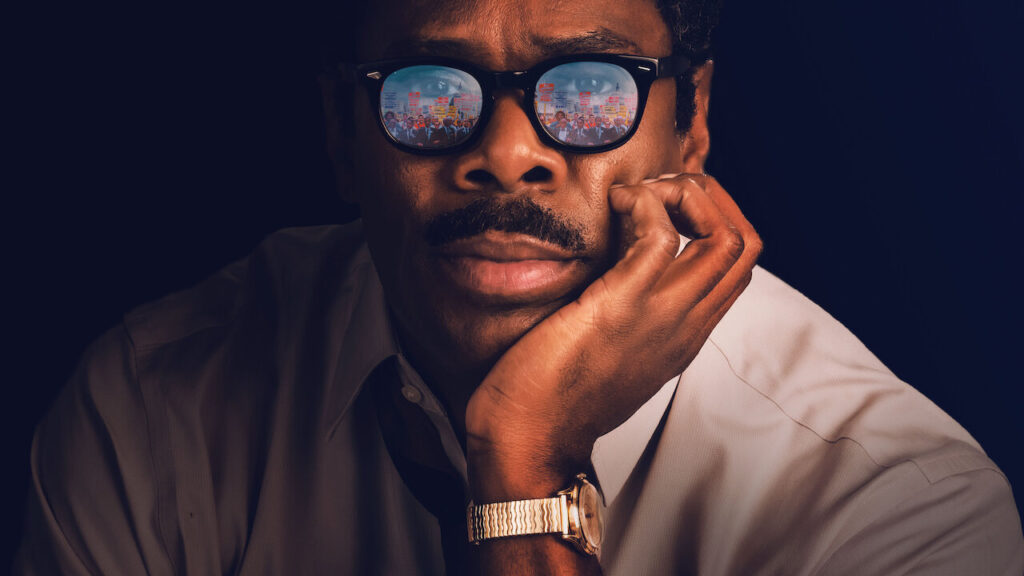
Bayard Rustin is a name I have heard many times in passing. I knew he was somewhat associated with the Civil Rights movement, but didn’t know any specifics. Come to find out- that’s by design. I couldn’t believe that I didn’t know that Bayard Rustin is THE PERSON WHO HAD THE IDEA FOR THE 1964 MARCH ON WASHINGTON! He was a visionary, and without him this pivotal moment in Black history would not have happened. This is an event that I have learned about all my life, yet Rustin’s part in it is never emphasized. This really got me thinking about why intersectionality is so important. Why should someone’s contributions to the movement be downplayed just because they’re LGBTQ+?
I really enjoyed this film, not only because it taught me about someone who is so important to Black history, but also because the film is beautifully done. I thought Colman Domingo’s performance as Mr. Rustin was quite compelling, and I liked the cinematography of the film. I would definitely recommend this Netflix film as a starting place for anyone who wants to learn more about the Civil Rights Movement.

This is a photo of Dr. King with Bayard Rustin. Apparently, Mr. Rustin was not only a trusted advisor to the reverend, but also a close personal friend. I look forward to reading and learning more about this important figure in Black history.
The Best of Enemies

Starring Taraji P. Henson, this film chronicles the unlikely friendship that blossomed between Ann Atwater, a civil rights advocate, and C.P. Ellis, the president of the local Ku Klux Klan chapter, in Durham, North Carolina. At first, I honestly only selected this film on Netflix because the premise sounded so absurd, I couldn’t believe it could actually be a true story- let alone one that happened right here in my home state. The movie featured wonderful performances from Taraji P. Henson (as usual) and Sam Rockwell, who played C.P. Ellis. As common as it is for historical films such as these to add in details that create a “white savior” character or characters, it was refreshing to find out that the climax of the film was actually completely accurate. Ellis really did tear up his Klan membership card in front of everyone at the charrette, and renounce the organization. He really did form a lifelong friendship with Atwater. Although many times, achieving this sort of breakthrough with someone by tolerating their bigotry isn’t possible, I think it’s really important to tell this story, because it has happened. And people who have the courage to change their minds and embrace better morals should be celebrated. I think it’s one of the hardest things we can do as humans. It’s also really important to honor people like Ann Atwater, who had to bear hearing Ellis’ hateful rhetoric before he changed. I would 100% recommend this film to anyone, and I plan on reading the book that inspired it, The Best of Enemies: Race and Redemption in the New South by Osha Gray Davidson.
Marshall
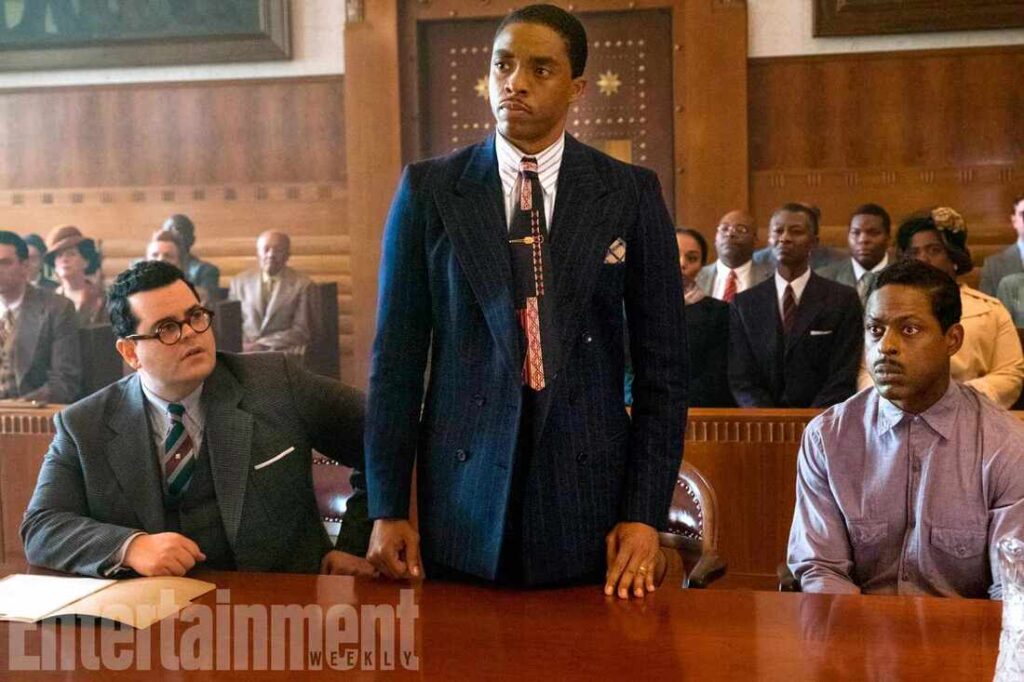
This was a rewatch, so I’ll keep my thoughts brief. This is a movie released in 2017, which stars Chadwick Boseman as Justice Thurgood Marshall in one of his earliest cases. It also stars Josh Gad as his co-counsel, and Sterling K. Brown as the defendant. I really enjoyed Boseman’s portrayal of Marshall (I enjoy all of his portrayals, lol), as well as Gad’s and Brown’s performances. I really liked this combination of actors. I also think that this movie wasn’t under pressure to be a biopic, or have some big message, and I hope to find and watch more films of this nature. As much as I enjoy the big, dramatic biopics, and the super-intense movies about Black history, I think the industry is oversaturated with those, and I really appreciated the fact that this movie was different.
Even though I didn’t get to do a whole lot more than watch these films (as well as a few others), I still learned some new things about Black history, and I believe that should be all of our goal during Black history month. I also think learning about Black history shouldn’t stop when Black history month ends. One thing I’m doing is re-reading Zora Neale Hurston’s Their Eyes Were Watching God in March, which is not only an important piece in the history of African-American literature, but also a story with some prominent feminist themes- which is fitting as we enter Women’s History month. I read this book in high school, but remember it about as well as you’d expect, so I’m so excited to dive in! I hope that you find some ways to engage with Black history and Women’s history that are exciting and engaging for you, too.